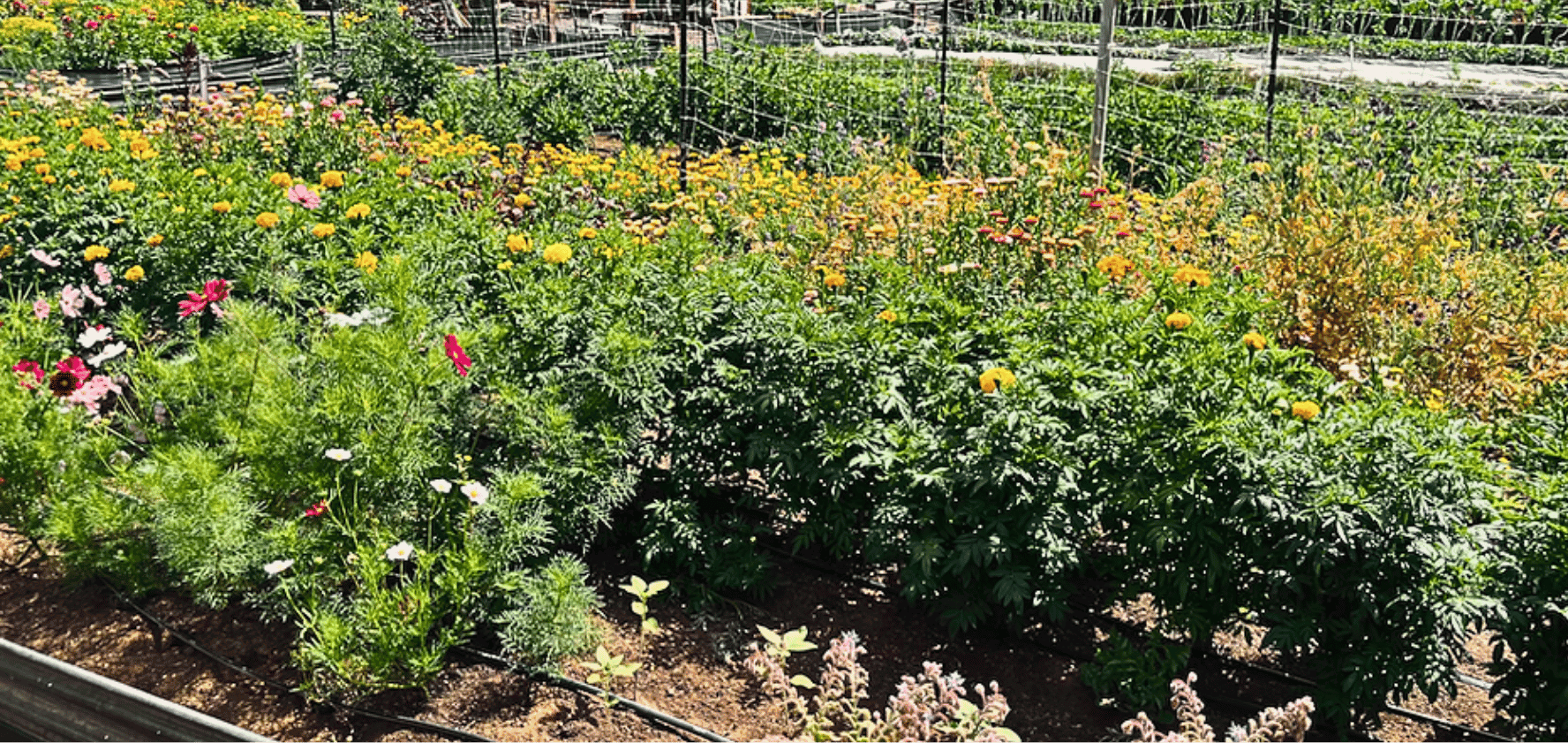
How getting to know the natural world changes the way we see it.
I recall a time in my life when I couldn't name a single plant I passed on the street.
Sure, as a kid (and even well into my younger adult years), I loved being outside and in nature. But my relationship with the natural world hadn't yet developed to the point where I could fully appreciate the diversity of life all around me.
Or at least not well enough to know the names of things.
So when taking in scenic views of forests or gardens, the colors, textures, and even smells would often collapse into a single, monochromatic smattering of green.
A friend of mine once called this “the green wall effect.”
He explained how, when you lack a meaningful connection to nature, the natural world tends to fold in on itself. Its multidimensionality flattens. Its distinct smells and textures fade away. And with them go all the contrasting features that make each plant unique.
Everything diminishes into a single, amorphous wall of green.
In this state, it's easy to overlook the smooth, merlot-colored branches of a manzanita bush or unwittingly pass by the wild blackberry shrub hiding just beyond an overgrowth of cattails alongside the road.
And like those blackberries, little miracles are often hiding just beyond the reach of our attention.
As we become more familiar with the natural world, learning the names of plants, recognizing their shapes, understanding their seasons and behaviors, something remarkable begins to happen.
The green wall starts to come apart.
What was once an indistinguishable patch of vegetation becomes a community of individual living things, each with its own characteristics, relationships, and stories.
Suddenly, there's so much more to see.
That's not to say I'm particularly good at identifying everything myself.
Just last week, I spotted a large white bird standing in a field and confidently mistook it for a heron.
(It was an egret.)
But even in my ignorance, the sight of that bird took my breath away.
And I think that's the point.
Not necessarily becoming an expert in identifying every species, but becoming connected enough to experience a sense of awe at the natural beauty that surrounds us.
Because how can we be expected to protect that which we do not know or appreciate?
That’s part of the reason I called the first module of our preschool curriculum “Befriending the Garden.”
I introduced the lesson by asking the children how we get to know someone new.
Usually, we begin by learning their name. Then, as the friendship develops, we discover the things that make them unique: their interests, their families, their favorite foods, and so on.
I suggested that plants and animals aren't all that different.
They, too, can be befriended.
In fact, I'd argue that they're practically screaming for our attention.
I mean, just look at the way a zinnia flower stretches out its multicolored petals, as if to say, “Look at me! Ask me something! I want to know you!”
Or the way a hawk twists its head and fixes its eyes on you from its perch, as though inspecting your soul for signs of integrity.
There's something wonderfully humbling about realizing that we're surrounded by a world full of living things, each going about its own existence, whether we notice them or not.
And perhaps that's one of the greatest gifts of paying attention.
It's hard to feel alone in this world when you take the time to look around.
There's so much color to take in.
We just have to learn how to see it.
From our October 19 newsletter. If this is the kind of farm you want to support, our CSA is the most direct way to do it.