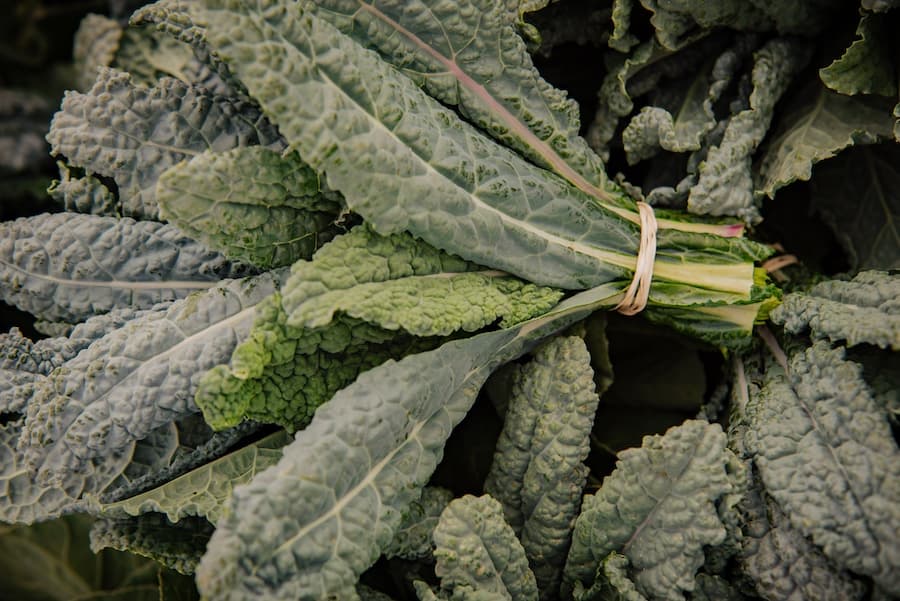
Growing organic food and growing a business share the same fundamental principles.
"David, is David here?"
I heard my name being called but wasn't sure why.
"I put your name down to do a live podcast," my friend told me, a large smile spreading across her face.
My eyes widened as I processed the situation.
"This is exactly what I showed up for," I reminded myself.
Just then, a feeling of confidence began to emerge.
I was ready.
"David, is there a David here?" the woman repeated.
"Yeah!" I responded, waving my hand as I put down my drink.
The setup was impressive. Two, maybe three, professional-grade cameras pointed toward a pair of empty leather seats. A branded backdrop completed the frame, offering a glimpse of what it might feel like to be on the red carpet.
As I sat down, I noticed the microphone was positioned almost perfectly at mouth level, as though they had been doing this all day with people around my general height. That seemed likely as I surveyed the surrounding crowd of fellow founders.
I wasn't sure what to expect from the first question, but I assumed I would be asked to explain what kind of business I ran. I was ready to deliver my elevator pitch.
But the interviewer had no interest in that.
Instead, she dove right in.
"What's the biggest problem you face in your business at this moment?"
Surprised by her directness, I let my heart do the talking.
"Growing with integrity," I said without hesitation, not knowing exactly who, or what, had prompted the response.
The words felt sturdy and smooth, qualities I have learned to recognize as signs that something is deeply true.
The interviewer flashed a quick smile. A slight turn of her head seemed to suggest that something inside her had ignited.
"Can you explain that?" she quickly followed up.
I explained that I believe growing organic food and growing a business share the same fundamental principles.
A degraded piece of land, for example, can produce impressive yields when fed enough chemical fertilizer. But that growth may not last forever.
Over time, fertilizer alone does little to build lasting soil health. When relied upon too heavily, it can contribute to degraded soil biology, weakened structure, and a growing dependence on external inputs.
The farmer may then need increasing amounts of fertilizer simply to maintain the same yields.
All the while, the soil becomes less resilient and the underlying problems become more difficult to solve.
The same can be true of businesses with poor unit economics.
Given enough easy capital to artificially sustain their operations, businesses can grow while continuing to lose money on every sale they make.
This behavior can, and often does, persist for some time, usually under the rationale of "gaining market share." But with each passing year, profitability can become an increasingly difficult goal to reach.
These inflated businesses must often continue growing at an unsustainable pace, lest they admit their faults and succumb to the weight of expectations placed upon them by investors seeking large returns.
Growing any business is difficult, no matter how you approach it. I am learning this in real time. But I have come to believe that some forms of growth are healthier than others.
And if one thing is crystal clear for us, it is that we want to bring the same care and stewardship to our business that we bring to our farm.
That is why we think about profitability in much the same way we think about soil health: both are foundational to every decision we make.
This does not mean pursuing profit at the expense of the things that make this farm special. It means being responsible about where we allocate our time, energy, and capital, and ensuring that each investment strengthens the purpose beneath the business: to build a food system that is human-scale, local, and built on relationships.
Healthy soil does not merely produce a good harvest. It becomes more resilient, more fertile, and more capable of supporting life with each passing season.
Healthy soil does not merely produce a good harvest. It becomes more resilient, more fertile, and more capable of supporting life with each passing season.
That is the kind of business we hope to build.
Not one that grows quickly while quietly exhausting the resources beneath it, but one whose growth makes its foundation stronger. One that creates more opportunity, deepens more relationships, and leaves the community that supports it healthier than we found it.
Sitting in front of those cameras, I did not have all of those words yet.
But I knew the feeling behind them.
We do not want to grow at any cost.
We want to grow in a way that is worth sustaining.
From our August 4 newsletter. If this is the kind of farm you want to support, our CSA is the most direct way to do it.