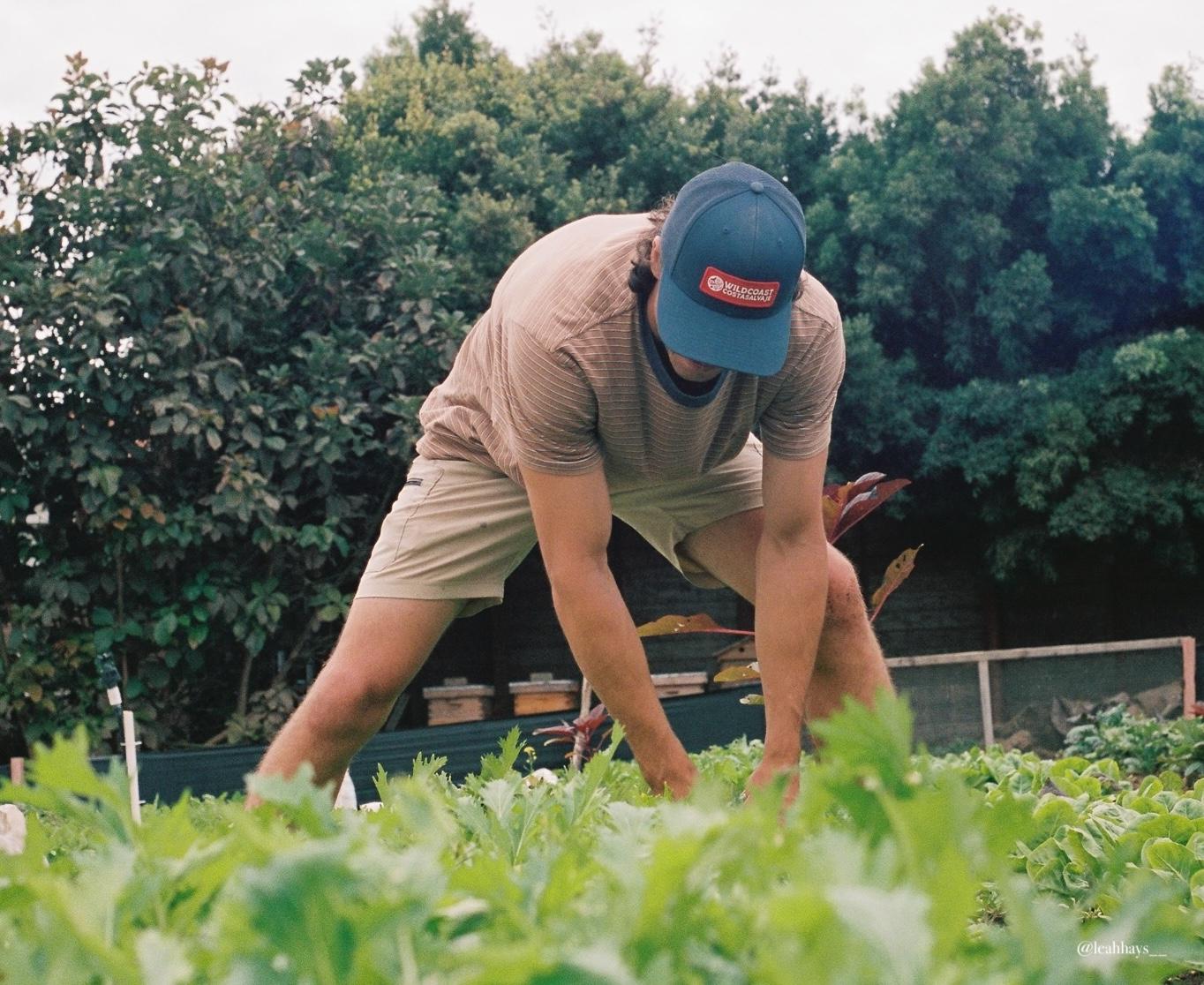
From someone who's still figuring it out.
It’s funny to witness yourself develop into some kind of “expert”.
At least in the eyes of others.
They seem to think you have all the answers.
Meanwhile, you're painfully aware of just how much you don't know.
“Can you help save my lemon tree? It's dying.”
“How do I keep the aphids from eating my kale?”
“Why aren’t my tomatoes producing any fruit?”
I get these types of questions all the time.
And I often feel like I let most people down when I say the one thing we all hate to hear:
It depends.
But it truly does.
In gardening, everything matters. Your soil type, where you're located, the time of year. Sandy soil behaves differently than clay soil. A tomato plant struggling in July might have an entirely different problem than one struggling in November.
If I don't know the answer off the bat, I usually start asking questions to better understand what might be going on.
In an ideal world, we identify the likely culprit.
Regardless, my hope is that the exercise encourages them to approach the garden as a living system.
One where everything is connected, and where the most useful thing we can do is sometimes nothing at all.
Just observe.
Because the longer we pay attention, the more nature reveals to us.
And problems that once seemed impossible to solve suddenly become a little less mysterious.
What's more is that I often find this approach applies well to life beyond the garden.
Just last week I was asked by someone how they should start taking action on their lifelong dream of opening a foster care facility.
I was stumped by the question.
But I sensed a quiet desperation in her words.
I don't think she was looking for a detailed roadmap as much as a little hope. Some reassurance that her dream was actually achievable.
It was something familiar.
I've found myself in that same position more than a few times in life.
So we set out to explore the problem together.
I asked her what her ultimate dream for this idea was.
Her ambitions were lofty. Inspiring.
She spoke of a foster center that not only housed youth but also prepared them with job training skills and offered onsite employment after they reached adulthood.
Her passion for this was palpable.
But the scale of her ambition was so large it left her completely unsure of how to start.
I shared my own experience with the tiny farm, and how starting small and allowing the idea to evolve over time has been crucial to whatever success we've had so far.
So I asked her what the smallest version of her dream might look like. Something she could begin working toward right now.
She expressed interest in hosting after-school cooking classes for foster youth.
“That’s perfect,” I told her.
She’s now looking to connect with local foster organizations to begin this process.
Did I have all the answers she was looking for?
No.
But I didn't need to.
Sometimes the best thing we can do is create space for someone (or ourselves) to explore a problem, ask a few questions, and see what emerges.
It's something the garden has taught me time and time again.
The right answer rarely reveals itself all at once.
It emerges through patient observation, experimentation, and a willingness to begin before we feel ready.
Sometimes we just need someone to remind us that it's okay to try things (and probably fail).
And perhaps it helps if that someone is a so-called "expert".
Even if that expert is still figuring things out themselves.