Big Data, big promises
Before AI, the world was captivated by the promises of Big Data.
Data was said to be the new oil, and many a millionaire was minted by tapping into the wells of bits stored deep within corporate data systems.
One of these new-age, MacBook-carrying prospectors was Jeff Hamerbacher.
As a student of technology, Jeff is someone I’ve long admired.
Through his many writings and interviews, he comes across as both deeply intelligent and remarkably grounded. If I had the chance, he’d be high on my list of people to share a beer with.
The tech brain drain
Jeff never set out to build large-scale data processing systems. Rather, he was hired in the early 2000s as a research scientist for a fast-growing social network called Facebook.
The problem, however, was that he had no reliable way to conduct his research. The data systems he inherited were a mess, and their structure was constantly changing as the business scaled.
Jeff quickly realized that, in order to do the job of a researcher, he first had to get his company’s data systems in order. “Persist, then analyze” became a phrase he often shared with colleagues and industry collaborators alike. Together, they would go on to build the systems that became the infrastructure of the Information Age.
And yet, despite his success in helping create new and sophisticated data processing technologies, Jeff sensed a looming problem. Big tech was beginning to show its shadow side. Money was pouring into these companies at staggering volumes, often through the business model of advertisements. And many were flocking to the space (myself included) to get a piece of the action.
In an interview, Jeff lamented the fact that so many bright minds were dedicating their energies and talents toward the shared aim of optimizing clicks. Or as he put it:
“The best minds of my generation are thinking about how to make people click ads. That sucks.”
Indeed, the world was experiencing a brain drain of colossal proportions, as people across industries left their fields to join the indulgences—I mean, innovations—of tech. Not only that, but NGOs and members of Congress encouraged this transition. “Learn to code” became a rallying cry of the 2010s, reflecting a widespread belief that the industry would remain in endless demand.
AI and the coming 'brain rain'
Fast forward to now.
AI is the new kid on the block. And ironically, it’s beginning to consume the very industry that gave it life.
Layoffs in tech have surged as of late, with much of it attributed to AI making many knowledge workers appea “redundant” on corproate spreadsheets.
It’s a troubling time for a lot of people, many of whom I know personally from my time in tech. A few I’ve spoken with have described a growing sense of uncertainty and fear within their teams. Some feel they’re operating on borrowed time, waiting for the day they’re told they’re no longer needed. Others, who feel a bit more secure, still wonder whether they’ll need to change careers in the next five to ten years—and worry whether they’re capable of doing so.
A different kind of work
In response to these uncertain times, I see many people beginning to build small side businesses.
Of course, the hope is to create a soft place to land in the event they’re let go.
But more importantly, they often share how much more meaning they’re finding in creating something that is uniquely theirs.
Work that puts them in direct relationship with the people they serve.
The silver lining
If there is a silver lining to these layoffs, it’s this: the redistribution of talent across a wide range of industries through the creation and support of small businesses.
Rather than a consolidation of talent flowing into a single industry, as we saw in tech in the 2010s, I suspect a rainfall of talent across a range of previously overlooked industries.
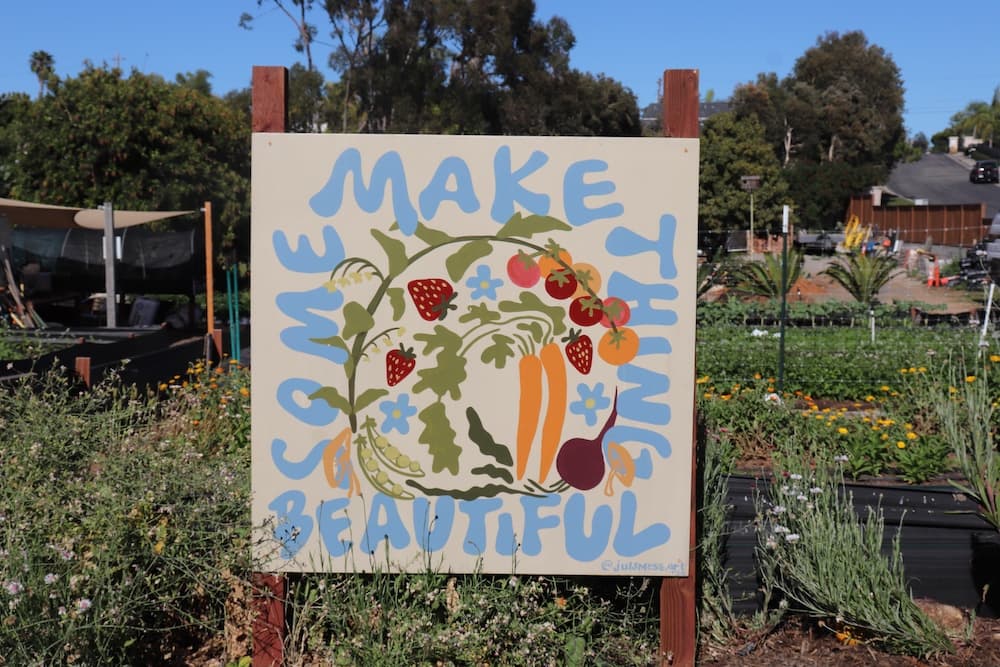
Farming, especially at a small scale, is one I’m naturally partial to, but many others are worth considering.
I call this coming counterbalancing effect brain rain.
Want to support small-scale farming here in Cardiff?
Our CSA brings locally grown produce and simple recipes to your kitchen each week.
A more beautiful future
As the world continues down an ever more precarious path, I find hope in a vision of the future where more people awaken to their true calling, no matter the sacrifice required to do so.
Where talent flows toward where it’s most needed—-in our local communities and neighborhoods.
Where good people doing honest work with integrity find themselves creating businesses that endure.
A future where Jeff may look out and say:
“The best minds of our generation are thinking about how to create more beauty in the world. That’s rad.”
✌️