I’ve always been drawn to things that don’t quite fit — ideas, people, and paths that sit just outside the mainstream. Lately, I’ve been wondering what that instinct might have to say about the kind of business worth building.
I’ve had a longstanding fascination with anything “alternative” throughout my adult life.
Music. People. Ideas. Careers.
Anything rejected by the majority, I seem drawn to investigate.
I sometimes wonder if this impulse stems from some subconscious rebellion against my rather conventional upbringing, or if it’s simply my curiosity leading me down places I’ve been told not to go.
Whatever the reason, I can’t help but get excited whenever I see topics I love explored through alternative lenses.
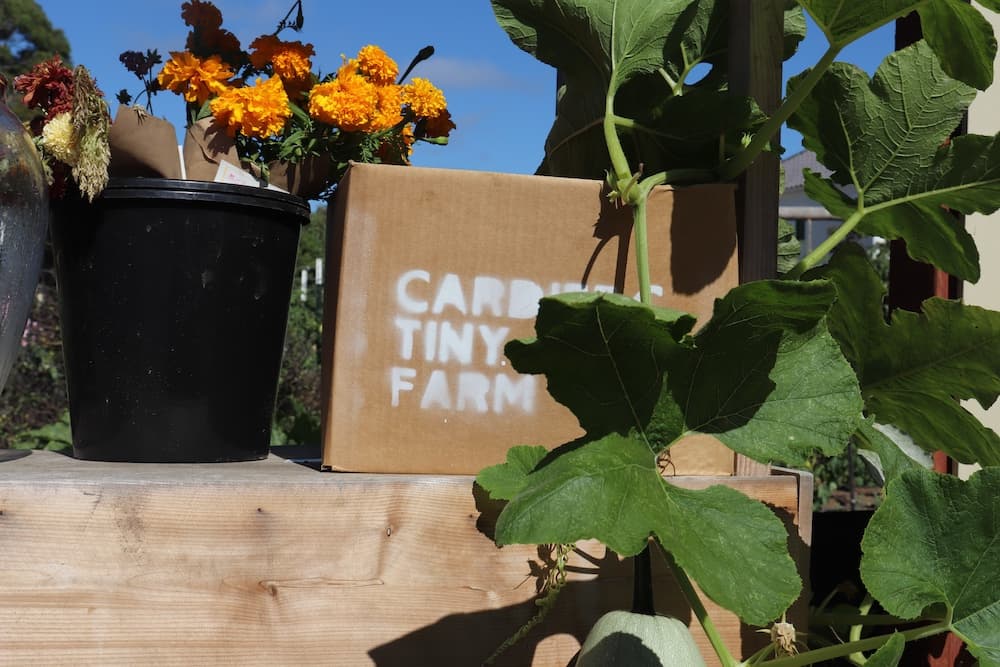
Which is why I was especially giddy when I recently discovered a paper examining the intersection between small farms and technology in what the author called “Alternative Food Networks.”
Hold my beer. Stop the press. Cancel everything.
I couldn’t wait to dive into this one.
What Are Alternative Food Networks?
The paper defines “Alternative Food Networks (AFNs)” as “networks between farmers who practice alternative agriculture, such as regenerative agriculture or agroecology, and consumers who purchase these products through mostly direct-to-consumer and direct-to-institution markets.”
Part of what characterizes AFNs is their alleged immunity from what the author calls “the processes of capitalism.” Competition, for example, is seen as less impactful within AFNs, as participatory businesses operate at smaller scales and foster deeper connections with their customer base. This, in turn, can lead to more consistent support regardless of wider macroeconomic conditions.
From this perspective, AFNs are seen as operating outside the standard economic system in what researchers call the “moral economy.”
In a moral economy, price is not the only factor involved in making an economic decision. Instead, price is weighed alongside considerations such as environmental stewardship, community resilience, and social welfare.
The Pressure to Conform
There are skeptics of this theory, however, who argue that AFNs still face the same competitive pressures as any business—though perhaps at a higher threshold. In other words, supporters of AFNs may still be price-sensitive, but are willing to spend a bit more if they believe in the non-monetary value a business provides.
But there is a limit, skeptics say, to the moral grace consumers extend to AFNs.
And often, many agribusinesses that initially position themselves as alternatives to our industrial food system end up, under market pressures, adopting many of the same industrial practices—“capital-intensive production systems, labor exploitation, and elite consumer targeting,” as the researchers note.
This is an especially important detail considering the growth of the alternative food industry. There seems to be a flood of capital being poured into reimagining our food system at the local, national, and global levels.
Many new agribusinesses would be wise to recognize the danger of succumbing to the trappings of overcapitalization or premature scaling—no matter how enticing their financial growth models may appear.
The Kind of Business I Want to Build
While the rest of the study goes on to assess the adoption of technology among small farms relative to the competitive pressures they face (I’ll likely share more on that later), I mainly wanted to highlight the discussion around AFNs—a term I was entirely unfamiliar with before reading this paper.
Part of my interest in AFNs is that it gives language to the kind of business I’ve long set out to build: one that considers profit and growth, but not at the expense of the community it serves; that values time and patience over immediate results; that grows into opportunities rather than out of problems it creates; and operates with integrity.
I agree that AFNs are not entirely immune to traditional business pressures, and that providing value to customers at a reasonable price is paramount to any business’s longevity. But I love how AFNs remind us that not everything valuable can be seen, held, heard, or tasted—it can only be felt. These intangibles can offer competitive advantages that are often inaccessible to larger, more distant conglomerates.
Of course, this depends on AFNs remaining honest in how they operate and intentional in how they grow—lest they lose the very feeling that differentiates them.
It’s a delicate dance—one that isn’t entirely formulaic, often requiring you to step off the beaten path to find the right rhythm (and look a bit ridiculous in the process).
But that may be exactly what’s required to alter the narrative.