I’m not proud to admit that on Friday night I made one of the classic blunders of social media:
the mindless and self-serving re-post.
Let me explain.
On Friday, I came across a viral social media post accusing Vital Farms — the company that helped revolutionize the pasture-raised egg industry through its network of small partner farms — of greenwashing. The claim centered on questionable lab test results involving their eggs and their known financial ties to large institutional investment firms like Vanguard and BlackRock.
As a long-time critic of our industrial food system, the post immediately resonated with me. Without much thought, I reshared it along with a caption that highlighted the local eggs we offer at our farm stand on Saturdays.
In retrospect, this was an impulsive decision.
A more reasonable approach would have been to look a bit deeper into the claims being made and evaluate for myself whether they held any real weight.
Because once I did that, I realized my thoughts and opinions on the matter weren’t nearly as rock-solid as my re-post may have suggested.
For starters, I don’t really know what linoleic acid is, or why high amounts of it are considered bad. All I knew — and this is the honest truth — was that the post compared the linoleic acid levels found in Vital Farms eggs to those found in canola oil, which I’ve been culturally conditioned to believe is the root (or rather, the seed) of all dietary evil.
So yes, my initial judgment was basically: Vital Farms eggs are bad because they tested high for a fatty acid I know nothing about, except that it’s associated with a seed oil I’ve been told to avoid.
Strong case so far, I know. :)
Next was the issue of Vital Farms’ financial ties to Wall Street villains like Vanguard and BlackRock, and the potential cost-cutting pressures often faced by public companies. Fortunately, I know a bit more about financial markets than I do about biochemistry, so I felt somewhat justified in my concerns about the fiduciary obligations Vital Farms now carries toward shareholders.
The post claimed that although Vital Farms began as a trustworthy network of small family farms producing truly pasture-raised eggs, the company has since resorted to using cheap, subsidized feed inputs like corn and soy, as well as certain spices that artificially enhance yolk color.
At first, this sounded reasonable. Corn and soy are some of the most heavily subsidized crops grown today, and so much attention has been given to their overproduction that they’ve become villains in their own right — especially among organic, sustainable, and health-conscious communities.
But if you had asked me what chickens should eat instead of corn, I wouldn’t have had a clue. Bugs? (And this is coming from someone who has spent a fair amount of time around small-scale poultry farms — I’ve just never been the one responsible for selecting the feed.)
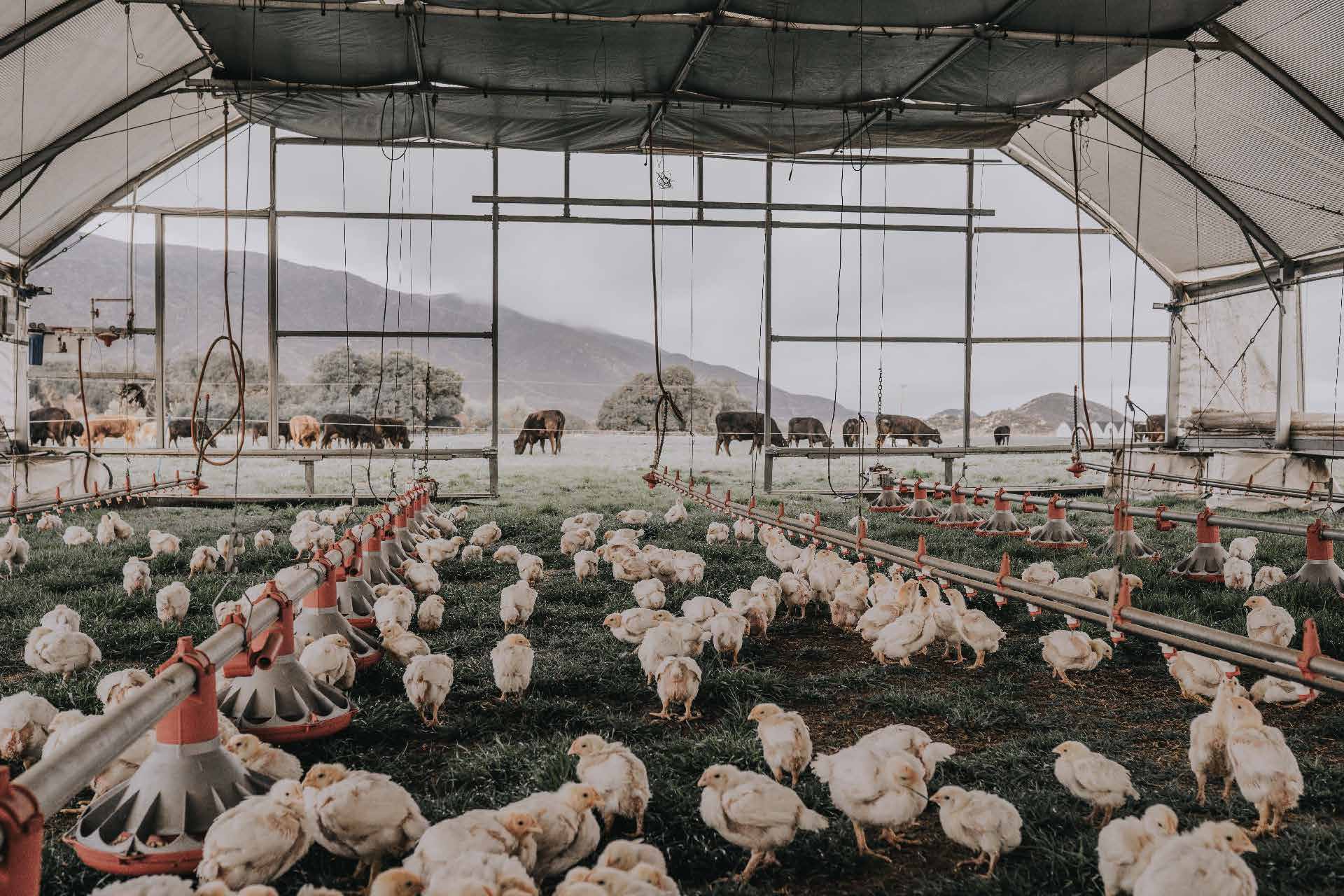
So I decided to ask my good friend Michelle, who raises chickens out in Ramona. Her farm, Black Mountain Farm, is where we source our eggs for the tiny farm. I’ve seen her operation with my own eyes and know the integrity with which she tends to her birds.
Her feed (which she mills herself) includes non-GMO corn and roasted soybeans — both, she says, are very difficult to source in the U.S. — along with alfalfa, camelina, oats, wheat, fish meal, aragonite (for calcium), and high-quality mineral and vitamin supplements.
Looking further into it, it seems most production-scale chicken farms (i.e., anything beyond a backyard coop) use some amount of corn and soy in their feed (though mostly GMO), as they provide the main sources of calories and protein in a chicken’s diet.
I share all of this not to defend Vital Farms. Beyond the accusations of diminishing feed quality and questionable financial incentives, I think they — like all large companies — face an inherent challenge in maintaining the integrity of their operations at scale.
Rather, I share this to highlight my own lack of questioning when it comes to information fed to me through my social media feed, as well as my admitted ignorance of topics I think I have strong reasons (or perhaps strong feelings) about.
It’s easy to jump to conclusions these days. It’s much harder to sit in confusion or suspended judgment while you seek out better information.
This was a good reminder for me to pump the brakes next time I get excited about something I see on social media — if only to avoid contributing to the confusion.
I hope this helps clear things up a bit, and maybe encourages a little more curiosity the next time you’re scrolling through social media.
✌️