Salad is having its moment.
Unfortunately, it is not in the best context.
The ongoing Cyclospora outbreak has caused many people to question the safety of the produce they buy. One expectant mother even shared that, out of an extreme abundance of caution, she refuses to eat another vegetable until after giving birth.
I suppose that is one way to steer clear of the parasite.
For me, the outbreak prompted a deeper look into Taylor Farms, one of the country’s largest fresh-food producers and a company connected to the current recall. I wanted to better understand the scale of production involved and how that scale may shape our attitudes toward the things we consume every day.
Last week, Taylor Farms de Mexico voluntarily removed iceberg lettuce sourced from central Mexico because of possible Cyclospora contamination. The FDA’s investigation remains ongoing, and a definitive source has not yet been established.
But even without a final determination, the event offers a remarkable glimpse into the scale of our modern food system.
According to Taylor Farms, the company provides 265 million servings of fresh food every week and employs more than 24,000 people. That figure staggered me when I first read it.
On one hand, there is something miraculous about it: the sheer coordination required to assemble enormous quantities salad greens and offer them at prices so low that I sometimes wonder how along the way they are making any money.
Another part of me finds it horrifying (but not necessarily for reasons involving food safety).
Sometimes I wonder whether this kind of commercial abundance changes our relationship with the things we consume.
When nearly everything is available all the time, does it become harder to appreciate how anything was made?
Does this kind of abundance eventually begin to feel like disposability?
Ours seems to be a culture in which buying, consuming, and discarding have become remarkably easy.
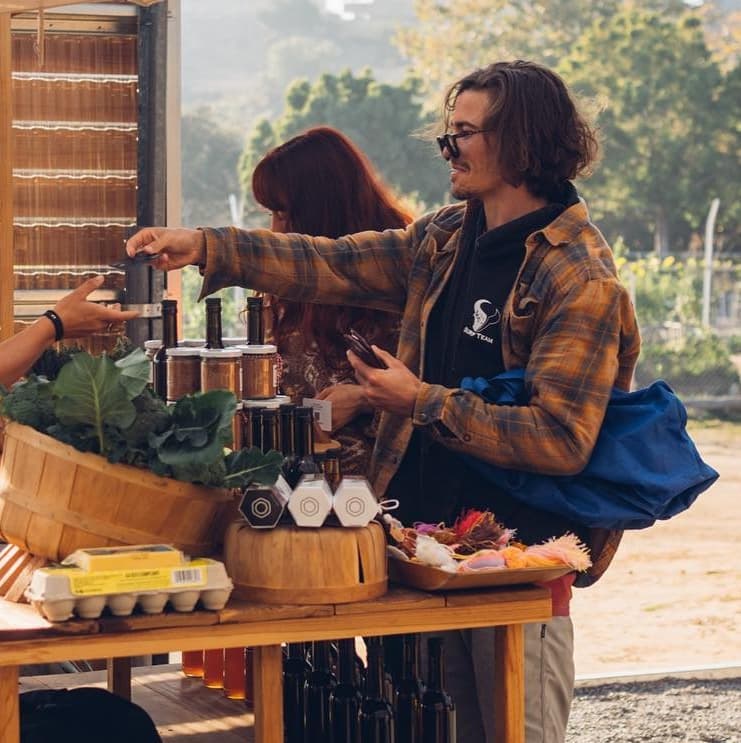
But a loaf of bread mixed by a baker, or a bowl shaped by a local ceramicist, or a head of lettuce grown by a farmer whose field you have walked tends to carry something more lasting than anything we encounter anonymously on a supermarket shelf.
Mainly because we can see the person behind it.
Scale is impressive to witness in action. It gives us access to an abundance that previous generations could scarcely have imagined.
But it can also obscure something many of us seem to be longing for: relationship.
✌️