A YouTube thumbnail, a weekend side-hustle, and a hunch
A friend recently sent me a YouTube video with a rather captivating title: **["3 Farm Businesses You Can Start at Home ($50 Startup)"](https://www.youtube.com/watch?v=fKmn9EB8LkY)**. Its thumbnail suggested that these businesses could earn you up to **“$2K Per Weekend.”**
From what little I’ve learned while [starting a YouTube channel for the tiny farm](https://www.youtube.com/@cardifftinyfarm), I could tell this wasn’t the creator’s first rodeo. The catchy title and polished thumbnail were clearly crafted to convince me to click.
And click I did.
But not only because of its fanciful framing of farming as a lucrative weekend side-hustle — I also had a hunch about which type of farming it would feature: hydroponics.
Sure enough, the first six seconds validated my assumption.
Organic infighting
I’m always fascinated by the nuanced debates that exist within niche subcultures.
Among programmers, it’s the age-old snake_case vs. camelCase dispute.
In jiu-jitsu, the maneuver du jour is endlessly contested.
Contractors, I've witnessed, passionately defend their preferred tool brand, judging all others as inferior (come to find my RYOBI set qualifies me as a total novice — not entirely wrong).
In organic farming, one particularly heated internal feud centers on hydroponics and its (mis)alignment with the original organic farming standards written into law in the early ’90s.
The National Organic Program (NOP) — “a federal regulatory program that develops and enforces consistent national standards for organically produced agricultural products in the United States” — originally emphasized food grown in healthy soils without synthetic chemicals.
At the time, hydroponic operations represented a small subset of “organic” production and often used large burlap sacks filled with soil.
Over time, however, as demand for organic produce grew, so did the number of hydroponic farms — often touted as more cost-efficient and sustainable. Ironically, as these operations expanded, the amount of soil used shrank.
What once filled a burlap sack eventually became a small cell tray. Plants were stacked vertically to maximize space and fed sunlight through artificial grow lights.
Investors applauded.
Meanwhile, the writers of the original NOP standards watched as the practices they spent decades advocating slowly wilted away.
Cheap, tasteless, and abundantly available
You may be surprised to learn that Driscoll’s is the largest producer of organic berries in the U.S. — over 80%, based on some figures I’ve read.
My understanding is that Driscoll’s operates more as an aggregator/distributor: farmers produce berries at a guaranteed fixed price, and Driscoll’s sells them at a high margin. In many cases, becoming a Driscoll’s partner farm requires growing berries hydroponically — presumably to guarantee predictable output for forecasting.
And in many ways, this system “works”:
Driscoll’s gets consistent supply, farmers get fixed-price security, consumers get cheap berries year-round.
A win-win-win… right?
Well, if you’ve eaten a pack of Driscoll’s berries lately, you may have noticed that despite their beautiful appearance, they often taste like cardboard.
Want seasonal food that doesn’t taste like cardboard? Our CSA boxes bring you nine locally grown items and simple recipes to cook them. Explore the CSA + reserve your share →
Sure, we now have strawberries in December — but many don’t hold a candle to the sun-ripened berries of summer.
And something about that feels off.
A world on life support
One of my favorite contemporary thinkers, Charles Eisenstein, once shared that his greatest fear wasn’t humanity’s extinction brought about by the death of the planet, but rather humanity’s survival in a world on life support — a wasteland stripped of natural beauty, kept habitable only through our dependence on machines.
Imagine trees and plants replaced by miles of oxygen-producing facilities (powered by solar, of course — because we’re “sustainable”). Natural spring water would no longer exist due to pollution, but desalinization plants would fill the gap. Nuclear energy would power endless digital infrastructure, requiring more forests to be cleared for data centers — which, conveniently, enable even more streaming options and food delivery services.
The birds, deer, and whales would suffer — but that’s “not our problem,” because human progress is all that matters. Beauty beyond human utility becomes a luxury, tolerated only when it doesn’t impede quarterly growth.
Yes, this is exaggerated.
But it’s the kind of future Charles was pointing toward: a world where technology replaces the very ecological functions that once supported us.
When taken to its logical conclusion, it’s not hard to imagine this reality waiting for us unless something changes.
The hydroponics question
To be clear: hydroponics does have valid benefits. Less water per plant. Potential for urban production. Reduced transportation costs and emissions.
But I can’t help wondering about the tradeoffs — especially the electrical load and the long-term reliability of scaling such systems. Larry Ellison famously tried to build an intelligent hydroponic facility in Hawai‘i, only to face a mountain of technical issues before shutting it down (but not before trying to sell $24 heads of lettuce at the local grocery store).
My biased take
My stance is simple:
Soil matters. Nature matters. Ecosystems matter.
Any food system that attempts to eliminate these elements is not a system I want.
Give me berries I can enjoy for only a few months each year — berries that fill my mouth and my spirit with joy, connecting me back to my nomadic ancestors.
Give me the bugs and the dirt on my lettuce, which I’ll gladly wash off knowing it grew from an ecosystem underground, not a sterile nutrient tube.
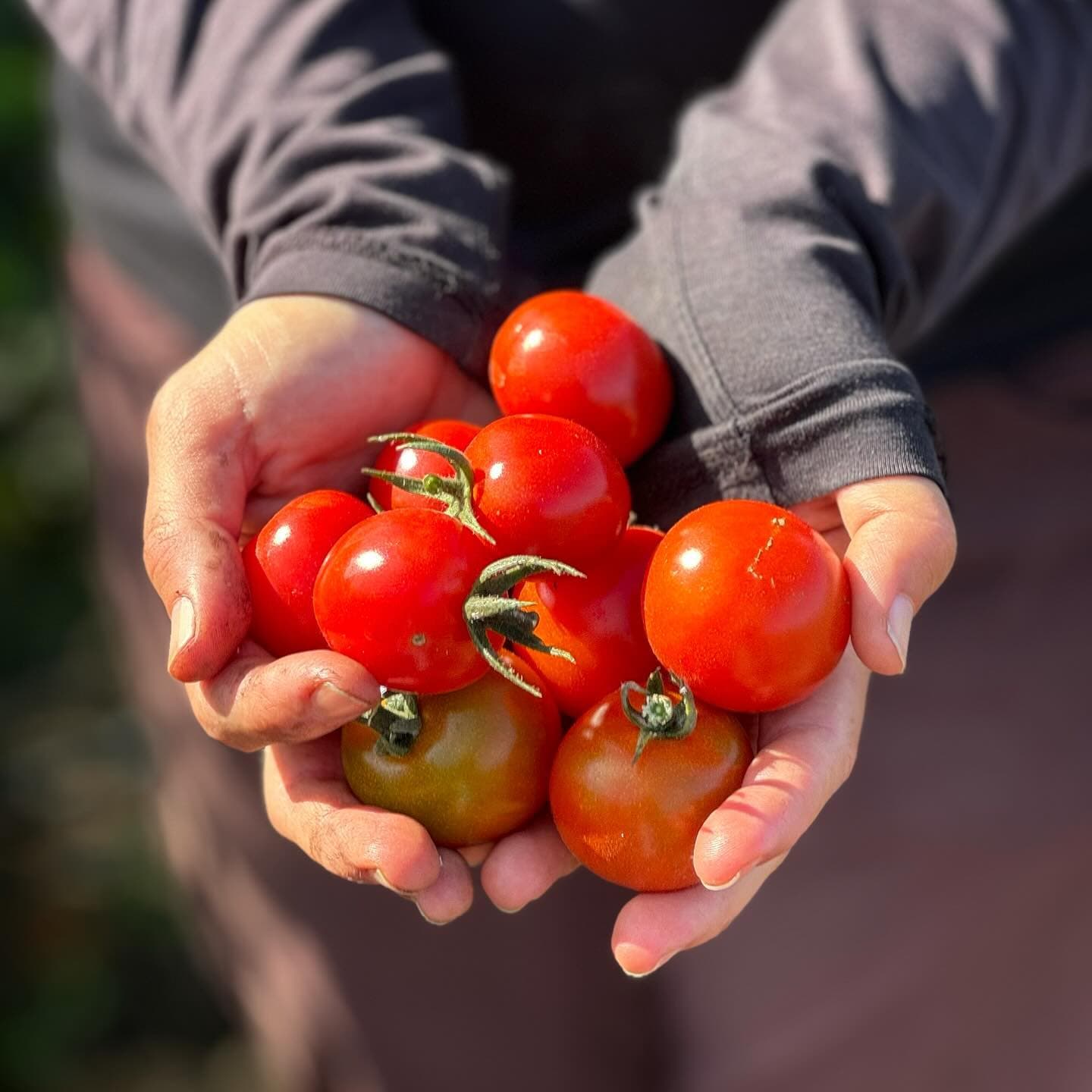
Give me cold winters that make me long for summer tomatoes, and hot summers that make me crave winter squash.
Give me people who labor to bring forth the food that, in turn, gives me life.
Give me food fed by rain, by compost, by worms and nematodes.
In short, give me food filled with life.
I admit I have a lot more to learn about hydroponics, and I acknowledge there may be aspects I’m missing. But as it stands today, I’m not convinced it’s the way forward — at least not for the food system I hope to see take shape. A food system, in particular, that's: